
What is robots.txt and sitemap.xml? Understanding Their Importance for SEO
Table of Contents
- Robots.txt and Sitemap.xml Explained: Complete SEO Guide for 2025
- What is robots.txt?
- What is sitemap.xml?
- How robots.txt and sitemap.xml Work Together for SEO
- Best Practices for robots.txt and sitemap.xml
- Tools to Generate robots.txt and sitemap.xml
- Why robots.txt and sitemap.xml Matter for SEO in 2025
- Final Thoughts
Robots.txt and Sitemap.xml Explained: Complete SEO Guide for 2025
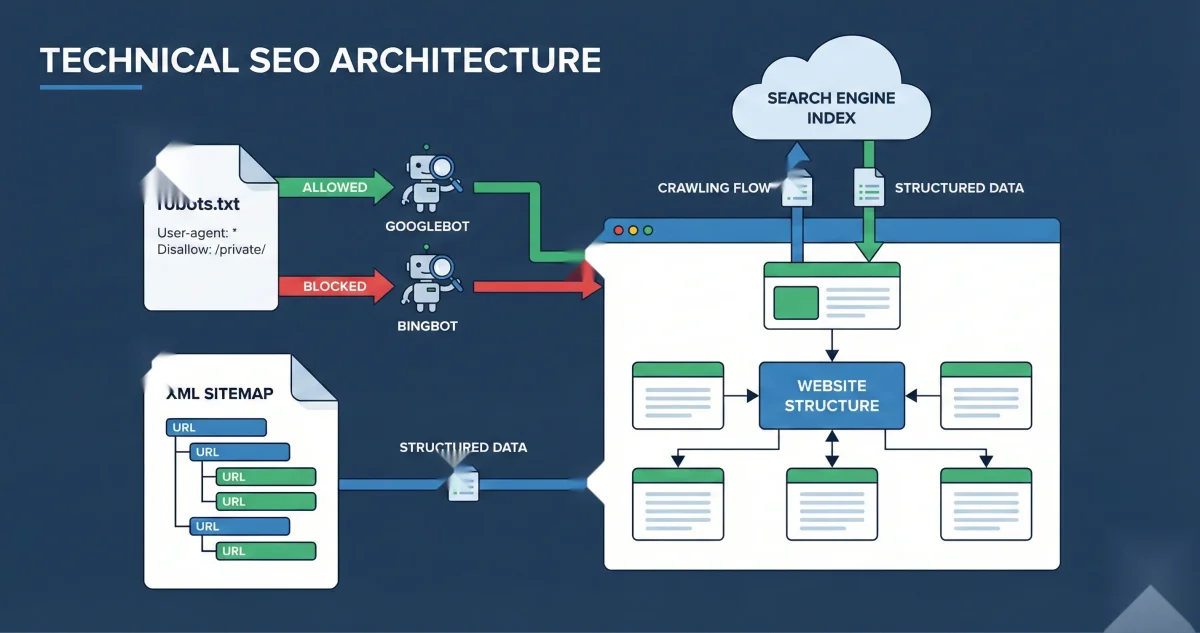
When it comes to optimizing a website for search engines, two files play a crucial role in how your site is crawled and indexed: robots.txt and sitemap.xml. These files help search engines like Google and Bing understand which pages to crawl, which ones to ignore, and how your website structure is organized. When used correctly, they can significantly improve your SEO performance and indexing efficiency.
What is robots.txt?
The robots.txt file is a text file placed in the root directory of a website. It gives instructions to search engine bots about which pages or sections they are allowed or not allowed to crawl. This file is especially useful for managing crawl budget, improving site performance, and preventing unnecessary indexing of low-value or sensitive pages.
Robots.txt is commonly used to block admin areas, login pages, duplicate content, or internal folders that should not appear in search results. It also helps reduce server load by stopping bots from crawling unimportant pages repeatedly. A well-optimized robots.txt file ensures that search engines focus only on your important content, improving overall SEO efficiency.
Example use cases of robots.txt include blocking admin folders, restricting private pages, and guiding bots toward important sections of the website. A misconfigured robots.txt file can harm SEO by blocking important pages, so it should always be handled carefully.
You can generate a proper robots.txt file using the Robots.txt Generator available on Toolszu.
What is sitemap.xml?
A sitemap.xml file is an XML document that lists all important pages of your website and helps search engines discover and index them efficiently. It acts as a roadmap for crawlers, especially useful for large websites or websites with complex structures.
A sitemap provides metadata such as page priority, last modified date, and update frequency. This helps search engines understand which pages are important and how often they should be crawled. Websites with proper sitemaps generally get indexed faster and more accurately than those without one.
Sitemaps are especially useful for new websites, large blogs, eCommerce stores, and websites with dynamic content. Even if your internal linking is strong, a sitemap ensures no important page is missed.
You can easily create a sitemap using the XML Sitemap Generator available on Toolszu.
How robots.txt and sitemap.xml Work Together for SEO
Robots.txt and sitemap.xml complement each other and should always be used together for best SEO results. Robots.txt controls which parts of your website search engines are allowed to crawl, while sitemap.xml tells them exactly which pages they should index.
For best practice, your robots.txt file should always include a reference to your sitemap. This helps search engines discover your sitemap faster and improves crawl efficiency. At the same time, make sure that none of the URLs listed in your sitemap are blocked in the robots.txt file, as this can prevent indexing and harm rankings.
When both files are properly configured, search engines can crawl your site more effectively, reduce crawl errors, and index your content faster.
Best Practices for robots.txt and sitemap.xml
Always include your sitemap URL inside the robots.txt file.
Avoid blocking important pages like homepage, category pages, or blog posts.
Keep your sitemap updated whenever new content is added.
Remove broken or redirected URLs from the sitemap.
Test your robots.txt file to ensure no critical pages are blocked.
Submit your sitemap to Google Search Console for faster indexing.
Tools to Generate robots.txt and sitemap.xml
Creating these files manually can be confusing, especially for beginners. Toolszu provides easy-to-use tools that help you generate and manage both files without technical knowledge.
Use the Robots.txt Generator to create a clean and SEO-friendly robots.txt file.
Use the XML Sitemap Generator to automatically generate and update your sitemap based on your website structure.
Both tools are free and optimized for SEO best practices.
Why robots.txt and sitemap.xml Matter for SEO in 2025
Search engines are becoming smarter, but they still rely on technical signals to understand websites. A well-structured robots.txt file ensures that search engines spend their crawl budget wisely, while a proper sitemap helps them discover and index your pages faster. Together, they improve crawling efficiency, indexing accuracy, and overall SEO performance.
Websites that properly maintain these files often see better visibility, fewer indexing issues, and improved rankings compared to sites that ignore them.
Final Thoughts
Robots.txt and sitemap.xml are small files with a huge impact on SEO. When used correctly, they help search engines crawl your website efficiently, index the right pages, and improve overall search performance. Whether you run a blog, business website, or large web platform, optimizing these two files should be a priority.
To make things easier, use Toolszu’s Robots.txt Generator and XML Sitemap Generator to create, manage, and optimize these files without technical hassle.
Robots.txt Generator → https://toolszu.com/onlinetools/robots-txt-generator
XML Sitemap Generator → https://toolszu.com/onlinetools/xml-sitemap-generator
Website Reviewer → https://toolszu.com/onlinetools/website-reviewer
Page Speed Checker → https://toolszu.com/onlinetools/page-speed-checker