
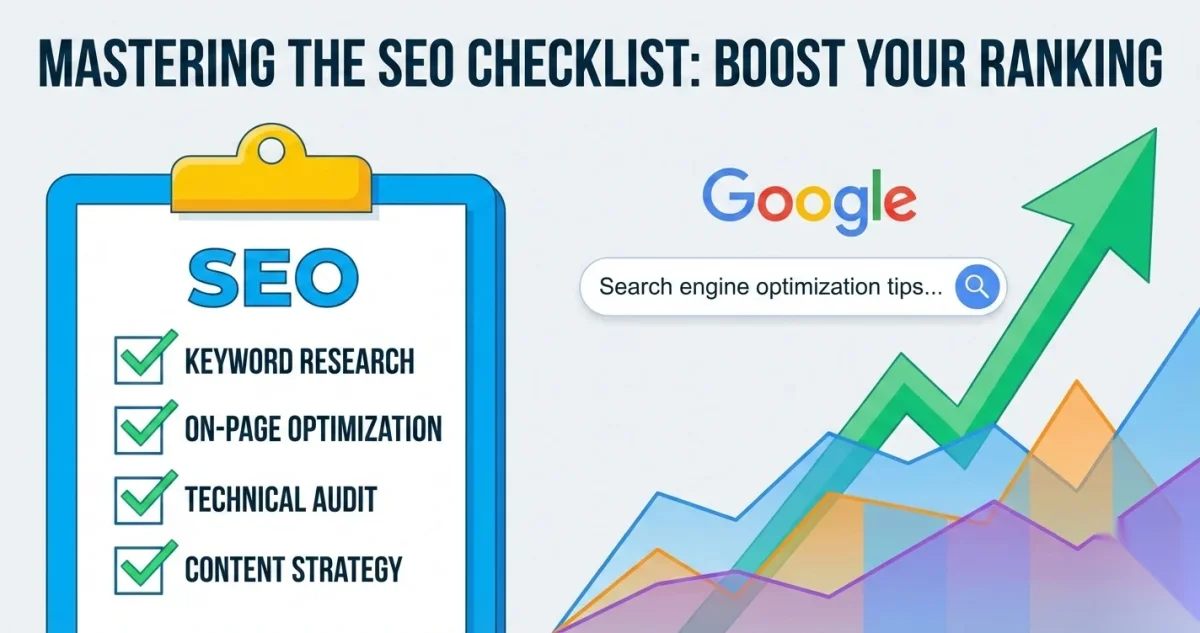
Ultimate SEO Checklist for 2026: Rank Higher on Google
Table of Contents
- Ultimate SEO Checklist for 2026: Rank Higher on Google
- 1. Essential Meta Tags
- 2. SEO-Friendly URL Structure
- 3. Open Graph & Twitter Cards
- 4. Header Tags (H1–H6)
- 5. Image SEO Optimization
- 6. Structured Data (Schema Markup)
- 7. Internal & External Linking
- 8. Mobile-Friendliness & Core Web Vitals
- 9. XML Sitemap & Robots.txt
- 10. HTTPS and Website Security
- Bonus: User Engagement Signals
- Final Thoughts
Ultimate SEO Checklist for 2026: Rank Higher on Google
Search engine optimization continues to evolve, but the fundamentals of on-page SEO remain essential for ranking higher on Google. Whether you’re a blogger, business owner, or SEO professional, following a structured SEO checklist ensures your website stays optimized, fast, and user-friendly.
Below is the complete and updated SEO checklist for 2026 that every website should follow.
1. Essential Meta Tags
Meta tags help search engines understand your content and influence click-through rates.
Title Tag
The title tag is one of the most important ranking factors.
Keep it under 60 characters and include your main keyword naturally.
Meta Description
Although not a ranking factor, it strongly affects CTR.
Keep it under 160 characters and make it compelling.
Meta Robots Tag
Use index, follow to allow search engines to crawl and index your page properly.
2. SEO-Friendly URL Structure
URLs should be clean, readable, and keyword-rich.
Bad example
example.com/p=123
Good example
example.com/best-seo-practices
A well-structured URL improves both user experience and search visibility.
3. Open Graph & Twitter Cards
Social media sharing impacts engagement and visibility.
Use Open Graph tags:
og:title
og:description
og:image
og:url
Use Twitter Card tags:
twitter:title
twitter:description
twitter:image
These improve how your content appears when shared on platforms like Facebook, X (Twitter), and LinkedIn.
4. Header Tags (H1–H6)
Headings improve readability and SEO structure.
Use only one H1 tag per page
H1 should match the main topic
Use H2–H6 for subtopics
Include keywords naturally
Proper heading hierarchy helps both users and search engines understand your content.
5. Image SEO Optimization
Images play a major role in page speed and accessibility.
Always use descriptive ALT text
Compress images to reduce load time
Use modern formats like WebP
Avoid large, unoptimized images
Optimized images improve Core Web Vitals and accessibility scores.
6. Structured Data (Schema Markup)
Schema markup helps search engines understand your content better and improves rich results.
Example Article Schema:
Schema improves CTR by enabling rich snippets such as FAQs, reviews, and breadcrumbs.
7. Internal & External Linking
Internal links help distribute link authority and improve crawlability.
External links build credibility and trust when linking to authoritative sources.
Best practices:
Link related articles internally
Avoid broken links
Use relevant anchor text
8. Mobile-Friendliness & Core Web Vitals
Google follows mobile-first indexing, making mobile optimization mandatory.
Ensure responsive design
Improve page loading speed
Optimize LCP, CLS, and INP
Use Google PageSpeed Insights
Fast and mobile-friendly websites rank higher and convert better.
9. XML Sitemap & Robots.txt
XML Sitemap helps search engines discover important pages
Robots.txt controls crawler access
Ensure:
Your sitemap is submitted to Google Search Console
Robots.txt doesn’t block important pages
10. HTTPS and Website Security
Google prioritizes secure websites.
Always use HTTPS
Install an SSL certificate
Avoid mixed content issues
Secure websites build trust and rank better.
Bonus: User Engagement Signals
User behavior plays a major role in SEO success.
Reduce bounce rate with engaging content
Increase dwell time with clear structure
Improve readability and navigation
Add internal links to keep users engaged
Higher engagement = stronger ranking signals.
Final Thoughts
SEO in 2026 is about more than just keywords. It’s about:
Optimized structure
Fast performance
High-quality content
Great user experience
Technical SEO compliance
By following this complete SEO checklist, you improve rankings, visibility, and user satisfaction — all essential for long-term growth.